
2026
2026
2026
2026
20
26
The State of AI Adoption
The State of AI Adoption
The State of AI Adoption
In Indian Startups
In Indian Startups
In Indian Startups
The story so far
The story so far
A year ago, the conversation around AI in Indian startups was charged with possibility but tempered by uncertainty. Founders were excited, but cautiously so. Models were impressive in demos but unpredictable in production. The question was never whether AI would matter, but whether it was ready to matter now.
That question has been answered.
A year ago, the conversation around AI in Indian startups was charged with possibility but tempered by uncertainty. Founders were excited, but cautiously so. Models were impressive in demos but unpredictable in production. The question was never whether AI would matter, but whether it was ready to matter now.
That question has been answered.

What our survey reveals is a landscape that has decisively shifted from experimentation to execution.
see more
[ 01 ]
What our survey reveals is a landscape that has decisively shifted from experimentation to execution.
see more
[ 01 ]
What our survey reveals is a landscape that has decisively shifted from experimentation to execution.
see more
[ 01 ]

The impact of AI has landed unevenly. It has struck hardest—and most visibly—in personal productivity, especially in engineering and product teams
see more
[ 02 ]
The impact of AI has landed unevenly. It has struck hardest—and most visibly—in personal productivity, especially in engineering and product teams
see more
[ 02 ]
The impact of AI has landed unevenly. It has struck hardest—and most visibly—in personal productivity, especially in engineering and product teams
see more
[ 02 ]

Perhaps the most striking shift is in how AI adoption is happening. Cultural resistance, a top complaint a year ago, has all but vanished.
see more
[ 03 ]
Perhaps the most striking shift is in how AI adoption is happening. Cultural resistance, a top complaint a year ago, has all but vanished.
see more
[ 03 ]
Perhaps the most striking shift is in how AI adoption is happening. Cultural resistance, a top complaint a year ago, has all but vanished.
see more
[ 03 ]
What emerges from all of this is a startup ecosystem that is firmly past the point of no return on AI. The excitement is real. The money is committed. The early results are encouraging
What emerges from all of this is a startup ecosystem that is firmly past the point of no return on AI. The excitement is real. The money is committed. The early results are encouraging
REPORT HIGHLIGHTS
REPORT HIGHLIGHTS
// HIGHLIGHT 01
download[ ]
share[ ]
// HIGHLIGHT 01
Founders are putting
money where their mouth is
Founders are putting
money where their mouth is
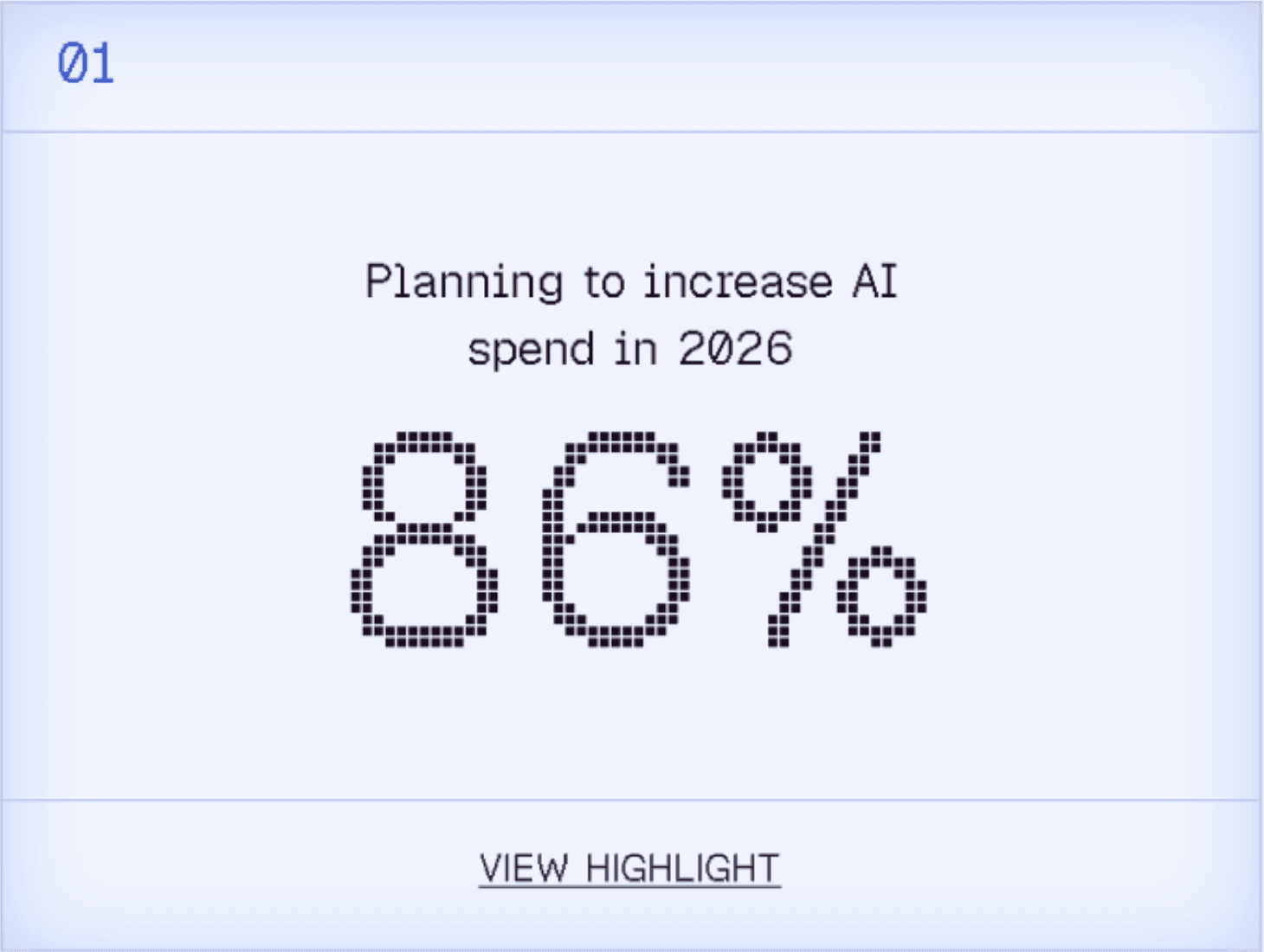
Over four in five founders report being more excited about AI than they were twelve months ago. Investment intent closely tracks this excitement, with an overwhelming majority (86%) planning to increase their AI spend in 2026. For the first time, excitement and action are moving in lockstep. This isn't the frothy enthusiasm where every pitch deck had an AI slide. Founders are citing real results, faster shipping cycles, tangible productivity gains, successful internal deployments as the reason for their growing conviction.
How has your excitement about AI changed over the past 12 months?
How has your excitement about AI changed over the past 12 months?
How do you expect your AI investment to change over the next 12 months?
How do you expect your AI investment to change over the next 12 months?
53%
53%
53%
SIGNIFIcant
increase (<2X)
SIGNIFIcant
increase (<2X)
SIGNIFIcant
increase (<2X)
SIGNIFIcant
increase (<2X)
33%
33%
33%
SLIGHTLY INCREASE
SLIGHTLY INCREASE
SLIGHTLY INCREASE
SLIGHTLY INCREASE
10%
10%
10%
REMAIN ABOUT THE SAME
REMAIN ABOUT THE SAME
REMAIN ABOUT THE SAME
REMAIN ABOUT THE SAME
04%
04%
04%
DECREASE
INVESTMENT
DECREASE
INVESTMENT
DECREASE
INVESTMENT
DECREASE
INVESTMENT
// HIGHLIGHT 02
download[ ]
share[ ]
// HIGHLIGHT 02
Productivity is the proving ground, and founders are doubling down
Productivity is the proving ground, and founders are doubling down
Over half of all founders point to productivity as the single biggest win.
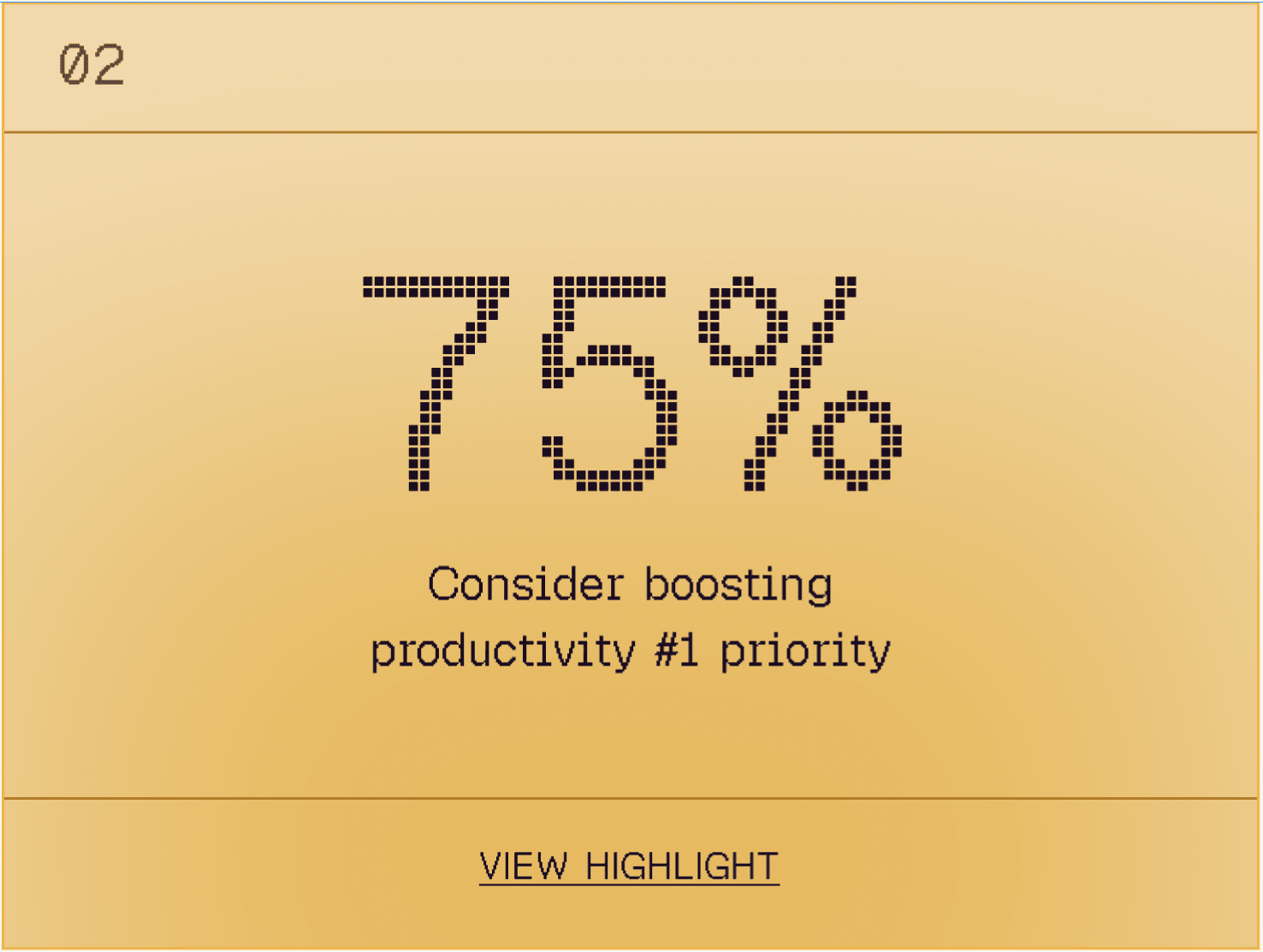
And it’s not just where they’ve seen results, it’s where they want to go deeper. When asked about strategic AI priorities for 2026, boosting team productivity tops the list at 75%, well ahead of every other option.
The logic is intuitive but worth articulating: founders have found their first clear proof point in productivity, and it’s become the proxy through which they expect other positive outcomes to materialise. Think faster product cycles, better products, stronger market positioning, and eventually revenue impact.
Over half of all founders point to productivity as the single biggest win.
And it’s not just where they’ve seen results, it’s where they want to go deeper. When asked about strategic AI priorities for 2026, boosting team productivity tops the list at 75%, well ahead of every other option.
The logic is intuitive but worth articulating: founders have found their first clear proof point in productivity, and it’s become the proxy through which they expect other positive outcomes to materialise. Think faster product cycles, better products, stronger market positioning, and eventually revenue impact.
Where has AI delivered the most measurable business impact for you so far?
Where has AI delivered the most measurable business impact for you so far?
// HIGHLIGHT 03
share[ ]
// HIGHLIGHT 03
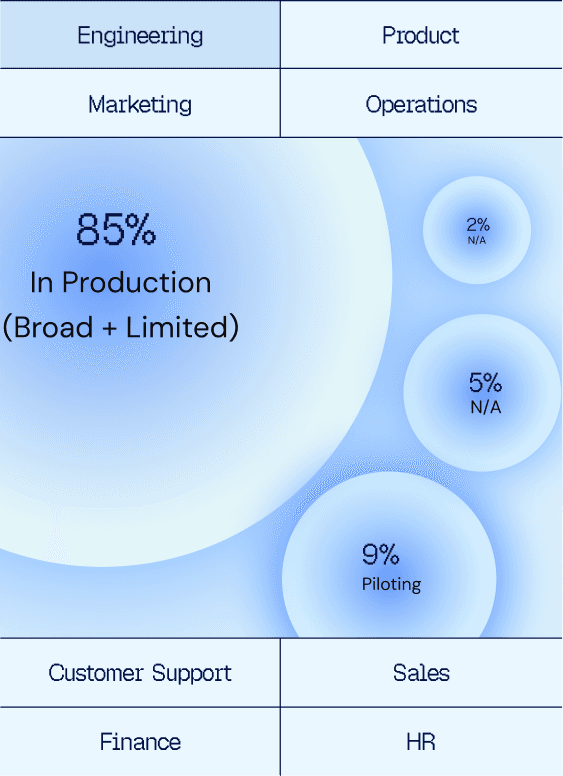
The adoption curve is steeply uneven among functions
The adoption curve is steeply uneven among functions
AI adoption across functions is not a rising tide lifting all boats. It’s a steep gradient.
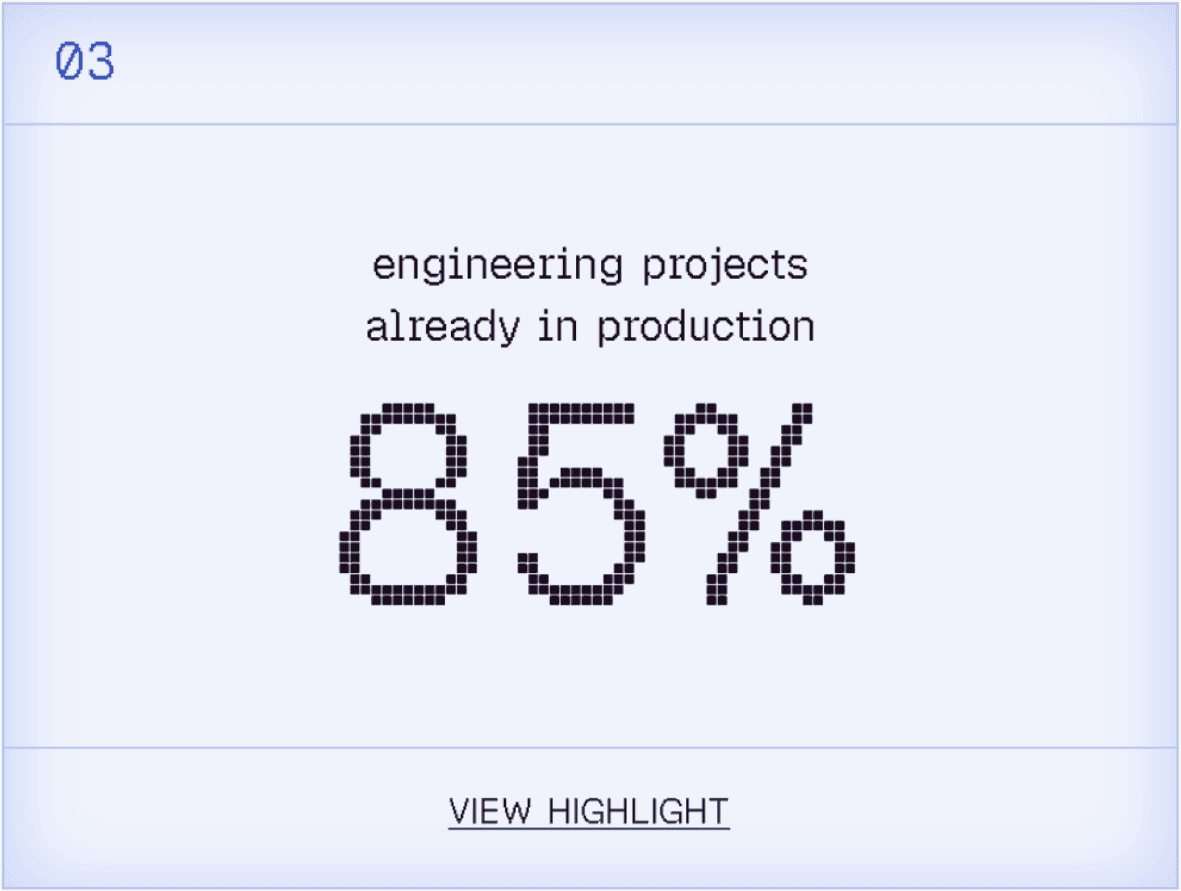
Engineering is at the front, with 85% of companies already in some form of production deployment. Product is close behind at 75%. Marketing (48%) and operations (40%) sit in the middle where they’re adopting, but not yet at scale. Then comes a sharp drop in customer support, sales, finance, and HR.
This unevenness maps to the maturity of available tools. For functions like HR, Finance, and Legal, the AI product ecosystem is still nascent. And this is a signal for builders: the next wave of AI-native companies will be those that build for the functions still left behind.
WHAT IS THE CURRENT AI ADOPTION STATUS FOR EACH
FUNCTION IN YOUR ORGANIZATION?
WHAT IS THE CURRENT AI ADOPTION
STATUS FOR EACH FUNCTION IN YOUR
ORGANIZATION?
Engineering
Product
Marketing
Operations
Customer Support
Sales
Finance
HR
Engineering
Product
Marketing
Operations
Customer Support
Sales
Finance
HR
Engineering
Product
Marketing
Operations
Customer Support
Sales
Finance
HR
// HIGHLIGHT 04
download[ ]
share[ ]
// HIGHLIGHT 04
The workforce recalibration has already begun
The workforce recalibration has already begun
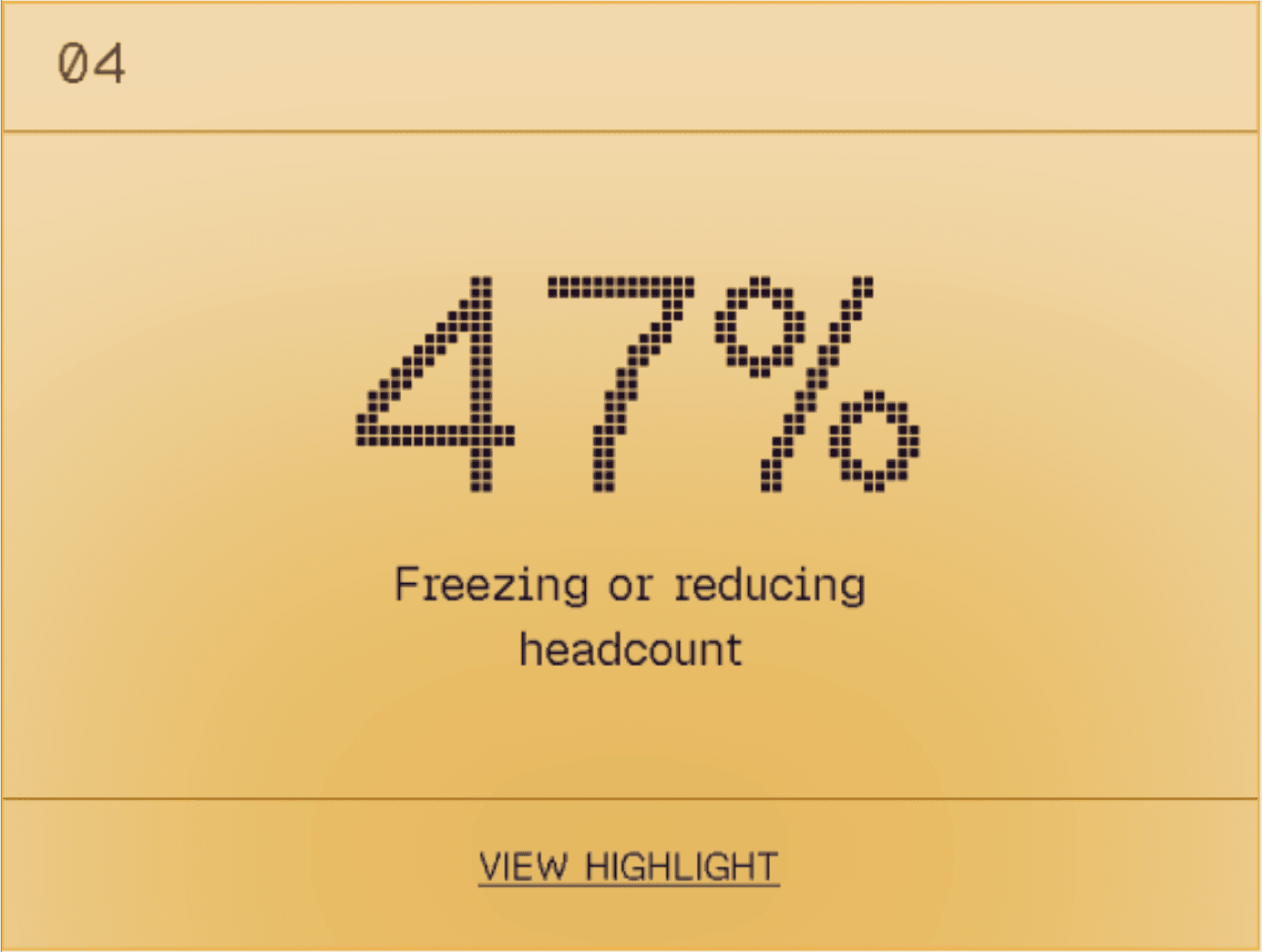
Nearly half of all founders are either freezing hiring in specific functions or actively reducing team sizes.
That said, this isn’t a dramatic restructuring. Nobody is mass laying off teams in the name of AI. What’s happening is subtler and more structural: founders are realizing that the same team size (or even a smaller one) can produce meaningfully more.
The calculus of headcount is being rewritten in real time, one function at a time
// HIGHLIGHT 05
share[ ]
// HIGHLIGHT 05
The evangelists are no longer in the C-suite
The evangelists are no longer in the C-suite
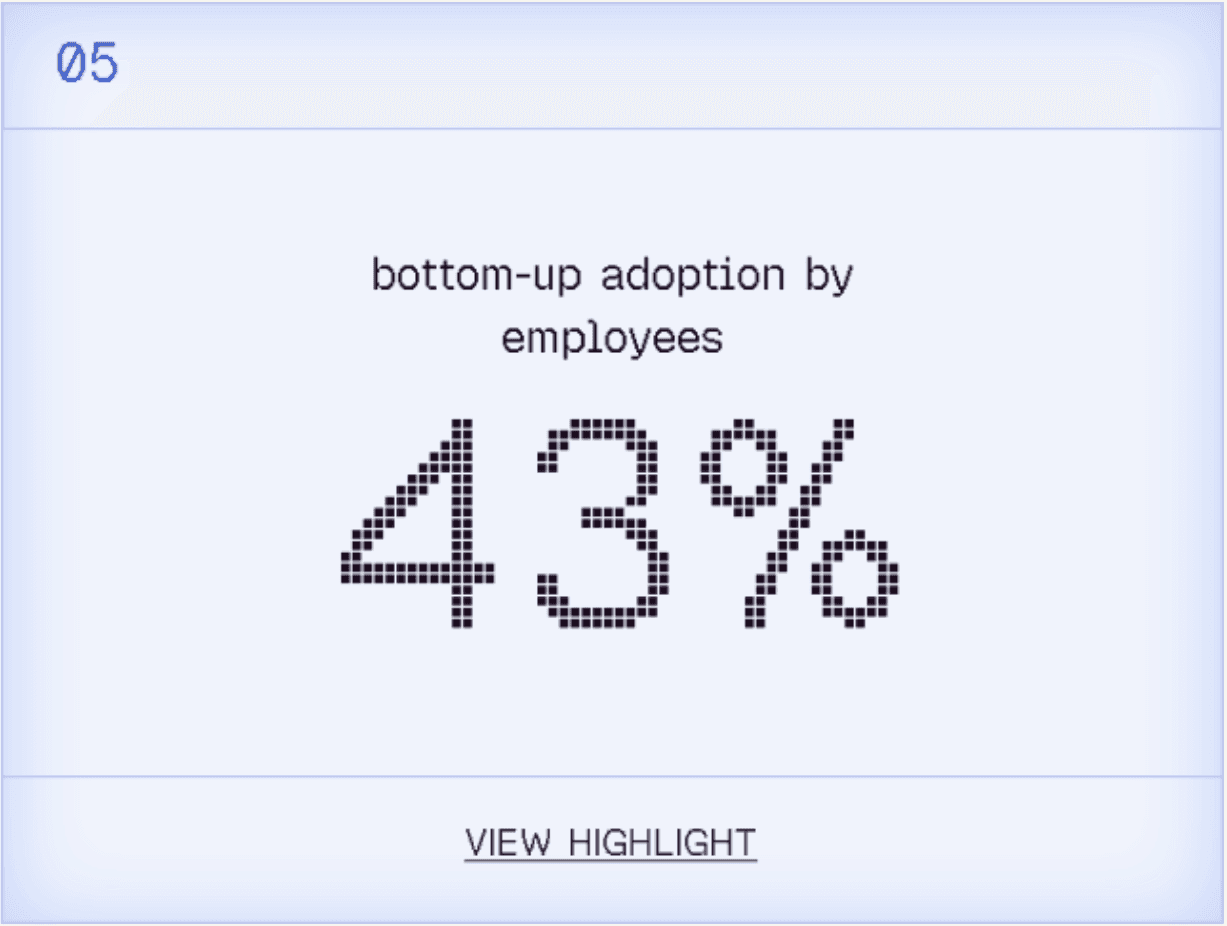
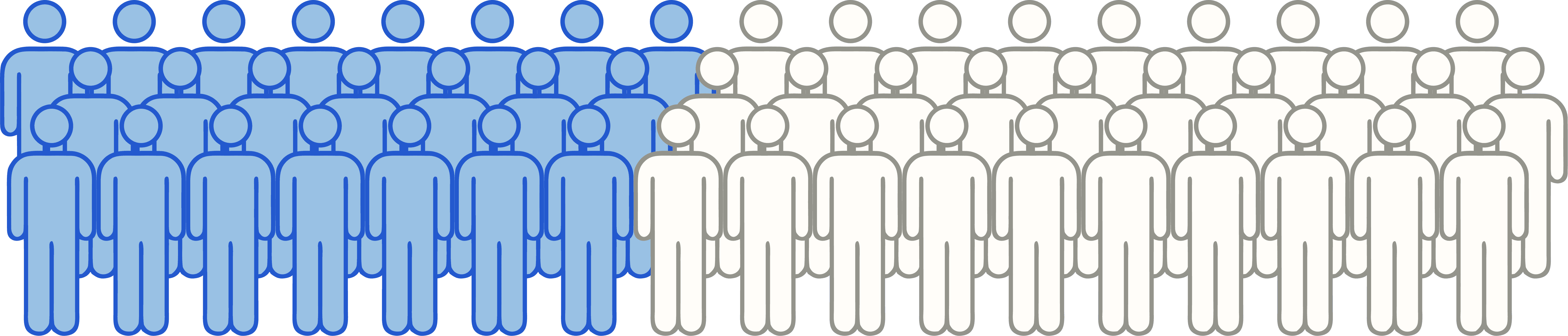
When asked how AI adoption is being driven in their organisation, the most common answer among founders was “bottom-up adoption by individual employees.”
A year ago, one of the most commonly cited barriers to AI adoption was cultural resistance within teams. Today, our survey shows a remarkable inversion: adoption is now being driven primarily from the bottom up, by individual employees who are discovering, testing, and championing AI tools on their own.
For founders, the internal sell is done. What remains is the operational plumbing.
How is AI adoption being driven in your organization?
What is the current AI adoption
status for each function in your organization?
43%
Bottom-up adoption by individual employees
Bottom-up adoption
Function-level
Centralized
Combination
Ad-hoc
Partners leading
Bottom-up adoption
Function-level
Centralized
Marketing
Operations
Customer Support
Finance
HR
43%
Bottom-up adoption by individual employees

Combination
Ad-hoc
Partners leading
Marketing
Operations
Customer Support
Finance
HR
Bottom-up adoption
Function-level
Centralized
Marketing
Operations
Customer Support
Finance
HR
43%
Bottom-up adoption by individual employees
Combination
Ad-hoc
Partners leading
Marketing
Operations
Customer Support
Finance
HR
// HIGHLIGHT 06
download[ ]
share[ ]
// HIGHLIGHT 06
AI is moving from the back office to the product
AI is moving from the back office to the product
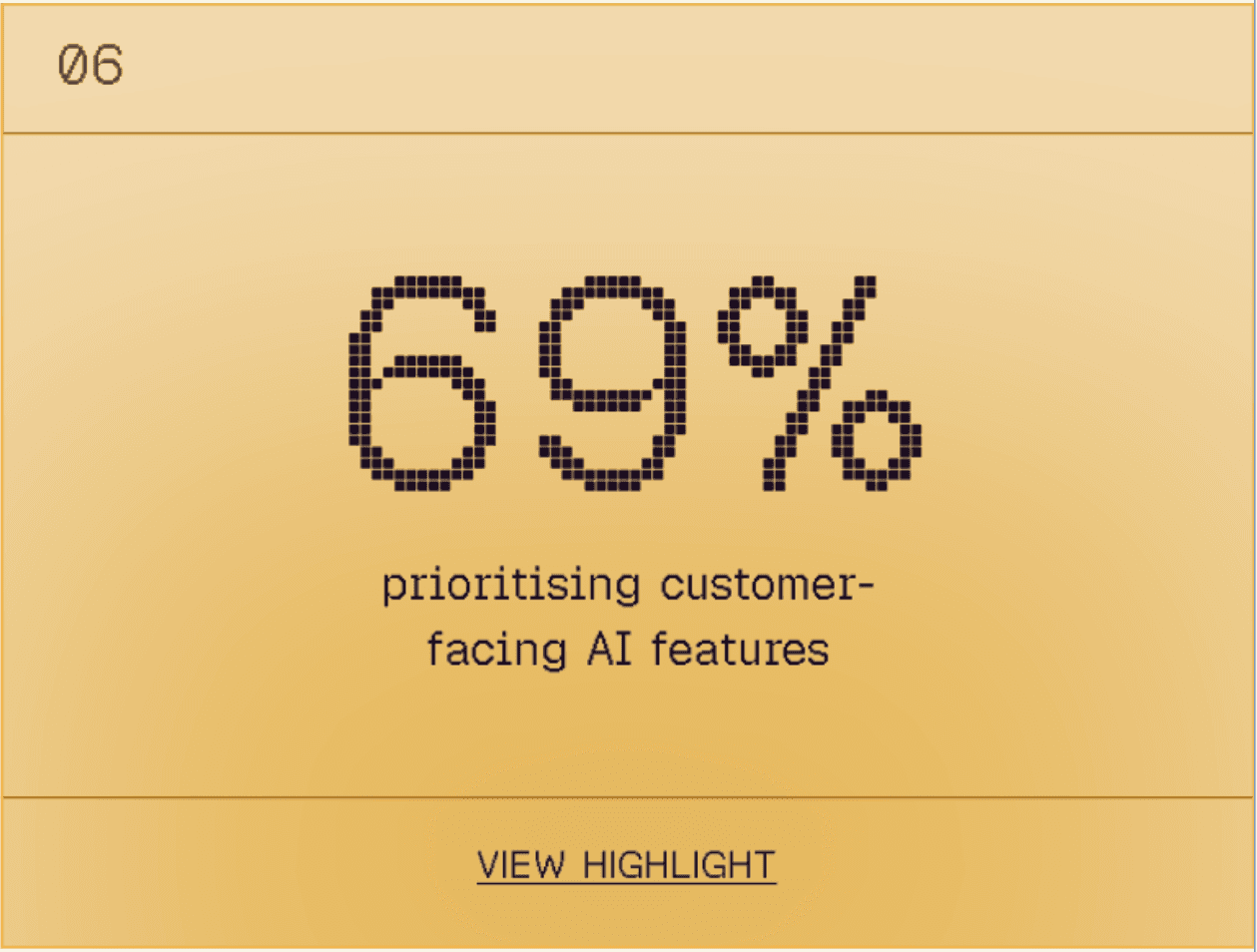
Launching customer-facing AI features is the second biggest priority for 2026, selected by 69% of founders, nearly as high as productivity.
As consumers grow accustomed to AI-powered experiences in search, shopping, and support, they expect similar intelligence and personalization everywhere. Founders are responding to this demand by prioritizing AI features in their product roadmaps.
Speed is also a driving factor behind this. 45% of founders cite faster experimentation and the ability to test 10x more ideas than before as AI's most unexpected benefit. Teams can now prototype and iterate on features at a pace unimaginable a year ago.
Explore By Roles
Deep-dive into the data that matters most to your function

AI Adoption Survey Report · Indian Startups 2026


Explore By Roles
Deep-dive into the data that matters most to your function
AI Adoption Survey Report · Indian Startups 2026
Explore By Roles
Deep-dive into the data that matters most to your function
AI Adoption Survey Report · Indian Startups 2026
Explore By Roles
Deep-dive into the data that matters most to your function
AI Adoption Survey Report · Indian Startups 2026
Explore By Roles
Deep-dive into the data that matters most to your function
AI Adoption Survey Report ·
Indian Startups 2026
ELEVATION